


 USS HALIBUT (SSG(N)587)

Launched 9 January 1959 by Mare Island Naval Shipyard, Vallejo, California; sponsored by Mrs. Chet Holifield, wife of Congressman Holifield of California.


USS Halibut Commanding Officers
LCDR W. Dedrick
- Jan 1960 to June 1961
CDR W. R. Cobean, Jr. - Jun 1961 to Nov 1962
LCDR J. F. Mangold - Nov 1962 to Nov 1963
CDR H. S. Clay - Nov 1963 to Apr 1967
CDR C. E. Moore - Apr 1967 to Nov 1969
CRD J. E. McNish - Nov 1969 to Aug 1973
CDR C. R. Larson - Aug 1973 to Jun 1976
USS HALIBUT
had the distinction to be the first submarine in the world designed and
built from the keel up to launch guided missiles, and could carry five
Regulus II missiles in a hangar integral with the hull. She is also
the first submarine to carry the Ships Inertial Navigation System (SINS).
While designed to carry the
Regulus II missile, the program had been terminated just 17 days prior to
HALIBUT'S commissioning. So HALIBUT departed for her shakedown
cruise 11 March 1960, equipped with Regulus I missiles. En route to the South
Pacific, on 25 March, she became the first nuclear powered submarine to
successfully launch a guided missile.
This was also to be a goodwill cruise to
New Zealand and Australia. When HALIBUT crossed the equator on 9 April,
she stopped for a topside Shellback initiation and swim-call.
HALIBUT'S first stop
in New Zealand was the Devonport Dockyard in Auckland,
from 19 to 21 April 1960.
HALIBUT returned to
the Mare
Island Shipyard on 18 June, 1960, for a routine yard availability. After a
short training cruise, she departed 7 November for Pearl Harbor and
active service with Pacific Fleet. On her first deployment she
successfully launched her seventh consecutive Regulus I missile during a
major Southeast Asia Treaty Organization weapons demonstration.
After a short stay back in Pearl
Harbor, HALIBUT began preparations for her second deployment on
1 May,
1961. During the months that followed she participated in several
guided missile launching exercises and underwent intensive training.
HALIBUT deployed for the third time to the Western Pacific in late 1961,
establishing a pattern of training and readiness operations followed
through 1964. On 4 May 1964, HALIBUT departed Pearl Harbor for the
last Regulus missile patrol to be made by a submarine in the Pacific -
Polaris was now on line. In September 1959, with the 1st
patrol of GRAYBACK, an era of submarine history began that would
go unrecognized for almost 40 years. Five REGULUS submarines:
USS GRAYBACK (SSG 574), USS TUNNY (SSG 282), USS BARBERO (SSG 317), USS
GROWLER (SSG 577) and USS HALIBUT (SSGN 587) deployed on 41 deterrent
patrols under the earth's oceans over the course of 5 years. Personnel who served aboard HALIBUT during these patrols
are now authorized to wear the SSBN Deterrent Patrol Insignia.
In February 1965, HALIBUT entered Pearl Harbor Naval Shipyard
for a major overhaul, and on 15 August she was re-designated SS(N)587.
After further modifications HALIBUT began service in May 1966 with the
Deep Submergence Group, involved in deep sea search & recovery. Other
"special operations" occupied HALIBUT until July 1968 when she was given the
covert mission of locating K-129, a Soviet Golf II missile submarine, which sank
the previous February. Finding the sunken boat in waters three miles deep
seemed impossible, but the mission ("Operation Sand Dollar") was accomplished
and Lyndon Johnson awarded HALIBUT the Presidential Unit Citation (PUC), the
highest submarine award possible.
In late 1970 HALIBUT underwent further modifications to accommodate a
special group of saturation divers using methods pioneered at SeaLab.
This "Special Projects" boat was now a part of Submarine Development
Group One.
For the successful completion of this mission, called "Ivy Bells," she
was awarded the Navy Unit Citation (NUC), and in 1972, for repeat
operations in the Sea of Okhost, HALIBUT was awarded the Presidential
Unit Citation. For 1974 & 1975, HALIBUT was awarded two consecutive NUCs
for continued Sea of Okhost operations.
Details of HALIBUT'S previously classified missions can
be found in Sontag and Drew's "Blind Man's Bluff." For more on the
sunken Golf II location and recovery attempt, read "Spy Sub" by Roger
Dunham. Also recommended is a book on the Halibut stealth operation
titled "Operation Ivy Bells" by Robt. G. Williscroft.


After visiting the capital city, Wellington from 24 to 27 April, HALIBUT then joined other units of
the 7th Fleet, for port visits to Sidney, which lasted from the 1st to the 7th
of May, then to Melbourn for a week. The occasion
was to celebrate the 18th anniversary of the Battle of the Coral Sea.

The Patrol dates are: 9 Feb 61 - 10 Apr 61; 1 May 61 - 28 Jun
61;
20 Dec 61 - 31 Mar 62;
9 Jul 62 - 15 Sep 62; 29 Apr 63 - 6 Jul 63;
19 Nov 63 - 20 Jan 64; and 7 May 64
- 14 Jul 64.
USS HALIBUT (SS(N)587)
HALIBUT'S success in locating and photographing K-129 resulted in President
Nixon giving the go-ahead to the CIA's "Project Azorian." Howard Hugh's Global
Marine, Inc. was contracted to design, build and operate the "Glomar
Explorer" in order to secretly salvage the sunken Soviet submarine from the
ocean floor.
In October of 1971 she embarked on another Spec Op, this time to launch
one of the most critical spy operations undertaken by submarines during
the cold war. Halibut was to locate and tap an underwater
communications cable that ran from the Soviet missile submarine base at
Petropavlovsk, on the Kamchatka peninsula, under the Sea of Okhost, to
Fleet headquarters near Vladivostok (see below for detailed look at
diving apparatus). 
Wilbur (Jerry) O'Neill, while working for Westinghouse in
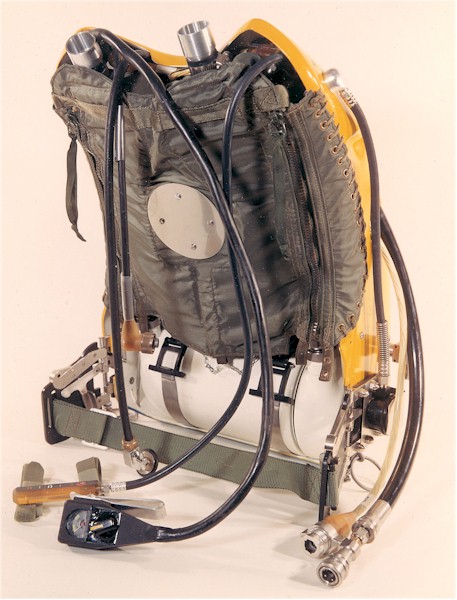
Annapolis MD, designed a semi-closed tethered diver breathing apparatus
which became the USN Mark XI. Having learned that this apparatus was used
from the Halibut during the episodes at the Sea of Okhost, he contacted me
for verification. Diver Bob Jones volunteered the following: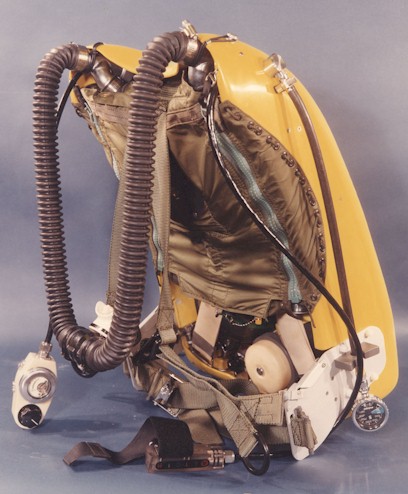
"The diving rigs we used on the first two missions ('71 & '72) were umbilical supplied and we got them from Westinghouse. They were called the "Abalone" or Mk 11. The rumored price was 3 million for 6 rigs!"
Jerry O'Neill was pleased to learn that his efforts contributed to the success of this mission, and he forwarded other images (below) that should be of interest to divers and those who were involved in this operation. Most of these images are from the SCUBA MK 11 MOD 0 - Operations and Maintenance manual, Deep Submergence Systems Office, April 1971.



On 1 November 1975 HALIBUT commenced a pre-inactivation availability at Mare Island which culminated in her decommissioning on 30 June 1976, and subsequent transfer to the Reserve Fleet. During her 16½ years of commissioned service Halibut completed 1,232 dives and 32 Regulus missile test launches.
She was stricken from the Navy Register on
30 April 1986. The former HALIBUT entered the Navy’s nuclear powered ship
and submarine recycling program on 12 July 1993, and on 9 September 1994 she
ceased to exist as a complete ship.

On the surface - full steam ahead - during sea trials.

In Sydney Harbor with the British submarine HMS Anchorite outboard,
and an
exercise [red bird] Regulus I missile on the launcher - May 1960.

Remember these?
![Stern planesman G.E.Flynn [GSSN] - image](images/GE%20Flynn%20planesman.jpg)
Intent on not loosing my "bubble."

On 9 April, 1960, crossed the Equator at the 166th meridan west
en route to New Zealand & Australia

Home from the sea - June 1960.
Article by
If you have any questions or comments, email me: gary@brewerygems.com
or
text me: 360-728-0062
All contents including images are copyright by
AboutSubs.com
and can not be used without permission from AboutSubs.
Copyright © 1999 ~ All Rights Reserved.
 HOME
|
EDISON |
SUNFISH |
POLLACK |
HOLY LOCH |
DOLPHINS |
SALES ROOM |
LINKS |
SITE MAP
HOME
|
EDISON |
SUNFISH |
POLLACK |
HOLY LOCH |
DOLPHINS |
SALES ROOM |
LINKS |
SITE MAP